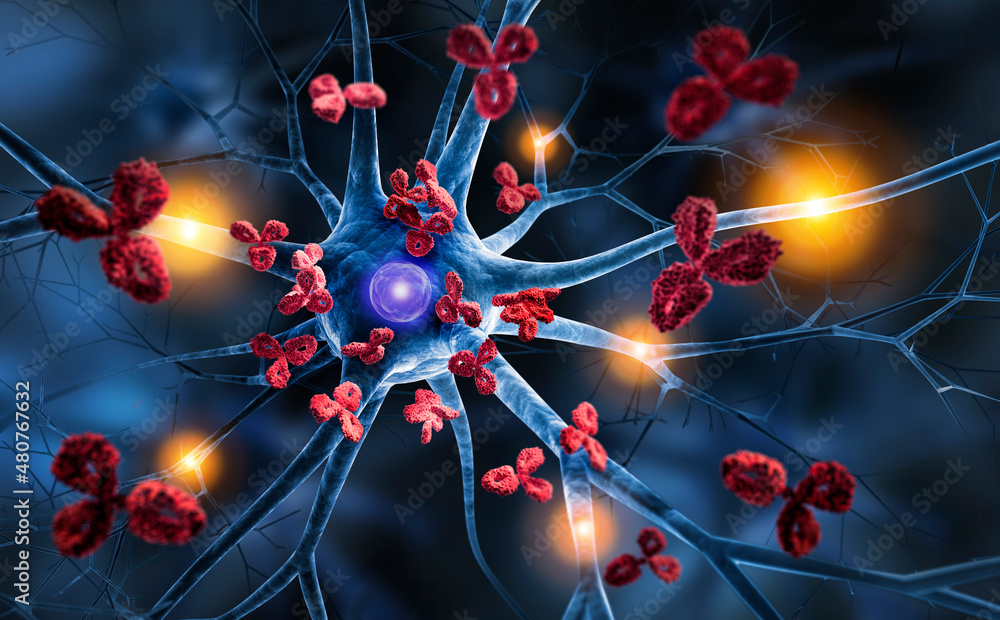
For a long time, I have been talking about autoimmunity being triggered by SARS-CoV-2 as one of the features of long covid for some people. I do not think that is true anymore, and I want to walk you through why. A growing body of research from 2024 through 2026, including a genuinely landmark autoantibody study out of Yale and Mount Sinai, now supports a much sharper conclusion. Autoimmunity is not a side effect of Long COVID. It is one of its central causal mechanisms. That changes what I think watchful waiting should look like in practice, and it is why I consider barrier and autoantibody testing something close to standard practice after any significant viral illness, not a tool we reach for only in the most complex cases.
The scale of what we are dealing with
Long COVID is common, and it is persistent. A 2025 meta-analysis pooling 144 studies put global prevalence at 36 percent, and the rates rose over time, from 35 percent under a year of follow up to 46 percent at one to two years. That tells me this is not a condition that reliably resolves on its own. A more recent 2026 review using a stricter WHO case definition found a lower but still substantial pooled prevalence of 30.8 percent. Whichever number you use, we are talking about tens of millions of people worldwide carrying some form of persistent post viral illness. That is the population we are working with.
From correlation to causation
From fairly early in the pandemic, the immunology researchers that I pay closest attention to, were calling COVID “The Autoimmune Virus”, we were seeing de novo autoimmunity and autoantibodies develop from any form of spike protein exposure and research started mapping cross reactivity between the virus / viral proteins and human tissues. Additionally the immune fingerprint left behind by this infection was mapped out and known.
All of that sets the stage for autoimmunity in a susceptible person.
Additionally we saw that patients with Long COVID were more likely to have autoantibodies than healthy controls, and that was interesting too.
But now we are 6 years in, and that’s enough time to have a deeper understanding. And the most recent literature uses strong language!
A 2026 systematic review in Lancet Infectious Diseases found that 31 of 44 studies, 71 percent, reported an association between autoantibodies and Long COVID occurrence, symptoms, and severity, with antinuclear, GPCR, and chemokine autoantibodies among the strongest candidates. But the study that actually moved me was the Yale and Mount Sinai work, because they tested causation directly rather than just describing another association. In their cohort, chronic pain was the symptom most strongly linked to autoantibodies, followed by headache, tinnitus, and dizziness. They then took IgG from Long COVID patients and passively transferred it into mice. The mice developed increased pain sensitivity and disorientation, and lost balance and coordination, mirroring the dizziness those same patients had reported. This is clinically relevant, not just interesting.. We have moved from antibodies simply being present alongside the illness to antibodies reproducing features of the illness in an animal model. The authors were direct about it: autoimmunity is a major contributor to symptom burden.
They also noted a high diversity of autoantibodies across participants, which tells us Long COVID is not one illness with one signature, it is a collection of endotypes, and different drivers will dominate in different people.
A parallel line of work has focused on the brain, and I think this deserves just as much attention. A 2024 study in the Journal of Advanced Research looked at IgM and IgG against myelin basic protein and myelin oligodendrocyte glycoprotein, alongside oxidative stress markers and affective symptoms, in 90 Long COVID patients against 90 healthy controls. Their conclusion was blunt: brain targeted autoimmunity contributes significantly to the pathogenesis of Long COVID and to the severity of its physio-affective phenome. That sits alongside separate imaging work showing measurable blood brain barrier disruption in these patients, and in vitro work showing that brain endothelial cells exposed to Long COVID patient serum switch on inflammatory markers. Put those together and what you get is sustained systemic inflammation paired with a genuinely leaky blood brain barrier. That, to me, looks like a real mechanism for Long COVID brain fog, not a symptom we should be filing under stress or deconditioning.
We are still in the prodromal period
I feel like I’m shouting this into the void. But we need to be really serious about this.
With the rare exception of something like catastrophic antiphospholipid syndrome, autoimmune disease does not appear overnight. It moves through a preclinical, asymptomatic phase, then an undifferentiated symptomatic phase, and only later into full blown disease that meets formal diagnostic criteria.
SARS-CoV-2 has infected an almost unmeasurable number of people worldwide, and the development of autoantibodies is itself the preclinical stage of autoimmune disease. Put those two facts together and it is reasonable to expect that the full impact of COVID triggered autoimmunity on population health will take years, quite possibly more than a decade, to become fully visible. We are, in a very real sense, still in the prodromal period of something that has not finished unfolding.
I think that is an uncomfortable, actually scary, thing to sit with, but we need to take it seriously!
Why every mechanism can trigger autoimmunity, not just the virus itself
Here is another thing that worries me.
SARS-CoV-2 spike protein cross reacts with human tissue antigens, including mitochondrial M2, F-actin, and thyroid peroxidase, and that molecular mimicry is a well documented route into autoimmunity.
But if we stop there, we are underselling the risk, because it is not the only route. Every downstream disease process we see in Long COVID is independently capable of breaking self tolerance in a susceptible person:
- Viral persistence and reactivation of latent viruses such as EBV or HHV-6 keeps antigen exposure chronic, so the immune system never fully stands down. EBV reactivation on its own is already strongly implicated in the onset of conditions like multiple sclerosis and lupus.
- Immune dysregulation, through cytokine driven epitope spreading, progressively widens the range of self antigens the immune system reacts to.
- Microbiome dysbiosis and loss of gut barrier integrity raises the total antigenic and endotoxin load an already stretched immune system has to deal with.
- Endothelial dysfunction and coagulopathy can expose cryptic neoepitopes through amyloid misfolding of fibrinogen, which generates genuinely new autoantigens.
- Neurological inflammation and blood brain barrier breakdown exposes central nervous system antigens the peripheral immune system does not normally encounter.
- Metabolic and mitochondrial dysfunction releases damage associated molecular patterns from injured mitochondria, adding further danger signals to an already noisy system.
- Genetic and epigenetic susceptibility, meaning HLA background and epigenetic priming, ultimately decides whether all of the above tips into overt autoimmune disease in that particular person.
Whether this actually becomes diagnosable autoimmune disease still depends on the individual in front of you, their genetic susceptibility, their cumulative environmental trigger load, and how much barrier integrity they had before they ever caught the virus. But the clinical point stands regardless. A patient does not need textbook molecular mimicry to end up with post viral autoimmunity. Persistent dysbiosis on its own, or unresolved endothelial injury on its own, can plausibly do the same job.
What this actually means for testing
If all of that is true, then waiting for a patient to arrive with a diagnosable, named autoimmune condition means we are intervening at the least useful point on the timeline. Most of the post COVID patients you and I are seeing in clinic sit somewhere between initial loss of tolerance and frank autoimmunity, and that is precisely the window where intervention has the most leverage, well before formal diagnostic criteria are anywhere close to being met.
So this is where I have landed clinically. I think it is imperative that we test autoantibodies, including neurological autoantibodies, in every Long COVID patient, in anyone with existing autoimmunity, and in high risk groups generally once they have had COVID or a COVID vaccine. Barrier markers, both intestinal and blood brain barrier permeability, need to be read alongside autoantibody markers rather than treated as a separate finding, because barrier repair is what actually stops cross-reactive antigens reaching the tissues they can react against in the first place. And where titres are strongly positive, rising on retest, or turning up alongside emerging clinical signs of a specific autoimmune disease, that is a referral, full stop, to rheumatology, endocrinology, or neurology as appropriate, for proper diagnostic confirmation.
Where this leaves us
The autoimmune hypothesis in Long COVID has moved from plausible theory to something much closer to demonstrated mechanism, with animal models now showing that patient derived antibodies alone can reproduce real symptoms. We are still early in a process that will likely take years to play out fully, and the mechanisms driving it are broader than viral mimicry on its own. Every arm of Long COVID pathology, gut dysbiosis, endothelial injury, neuroinflammation, has its own independent route to breaking self tolerance. That is the case, as I see it, for testing early, testing broadly, and taking barrier health just as seriously as autoantibody status in every patient recovering from a significant viral illness.
Practitioners, if you want to go deeper on post-infection autoimmunity, I have recorded a full webinar on this topic, The Long Road: Functional Immunology Testing for Autoimmunity, Barrier Dysfunction and Neurological Reactivity in Post-Viral Illness. You can watch it in the Learning Hub on your Regenerus practitioner dashboard here.
References
Wilhelm F, Cadamuro J, Mink S. Autoantibodies in long COVID: a systematic review. Lancet Infect Dis. 2026;26(4):e220 to e230.
Santos Guedes de Sa K, Silva J, Bayarri-Olmos R, et al. A causal link between autoantibodies and neurological symptoms in long COVID. Cell. 2026;189(11):3214 to 3235.e37.
Thwaites RS, Talwar S, Harker JA, Openshaw PJM. Autoimmunity in long COVID. J Allergy Clin Immunol. 2025;155:1082 to 94.
Almulla AF, Maes M, Zhou B, Al-Hakeim HK, Vojdani A. Brain-targeted autoimmunity is strongly associated with Long COVID and its chronic fatigue syndrome as well as its affective symptoms. J Adv Res. 2024. doi 10.1016/j.jare.2024.11.011.
Al-Aly Z, Topol E. Solving the puzzle of Long Covid. Science. 2024;383(6685):830 to 832.
Open Forum Infect Dis. 2025;12(9):ofaf533.
Vojdani A, Vojdani E, Kharrazian D. Reaction of human monoclonal antibodies to SARS-CoV-2 proteins with tissue antigens: implications for autoimmune diseases. Front Immunol. 2020;11:617089.